

WHY PRINTED BROCHURES MAY NOT BE HEADED THE WAY OF THE DINOSAURS
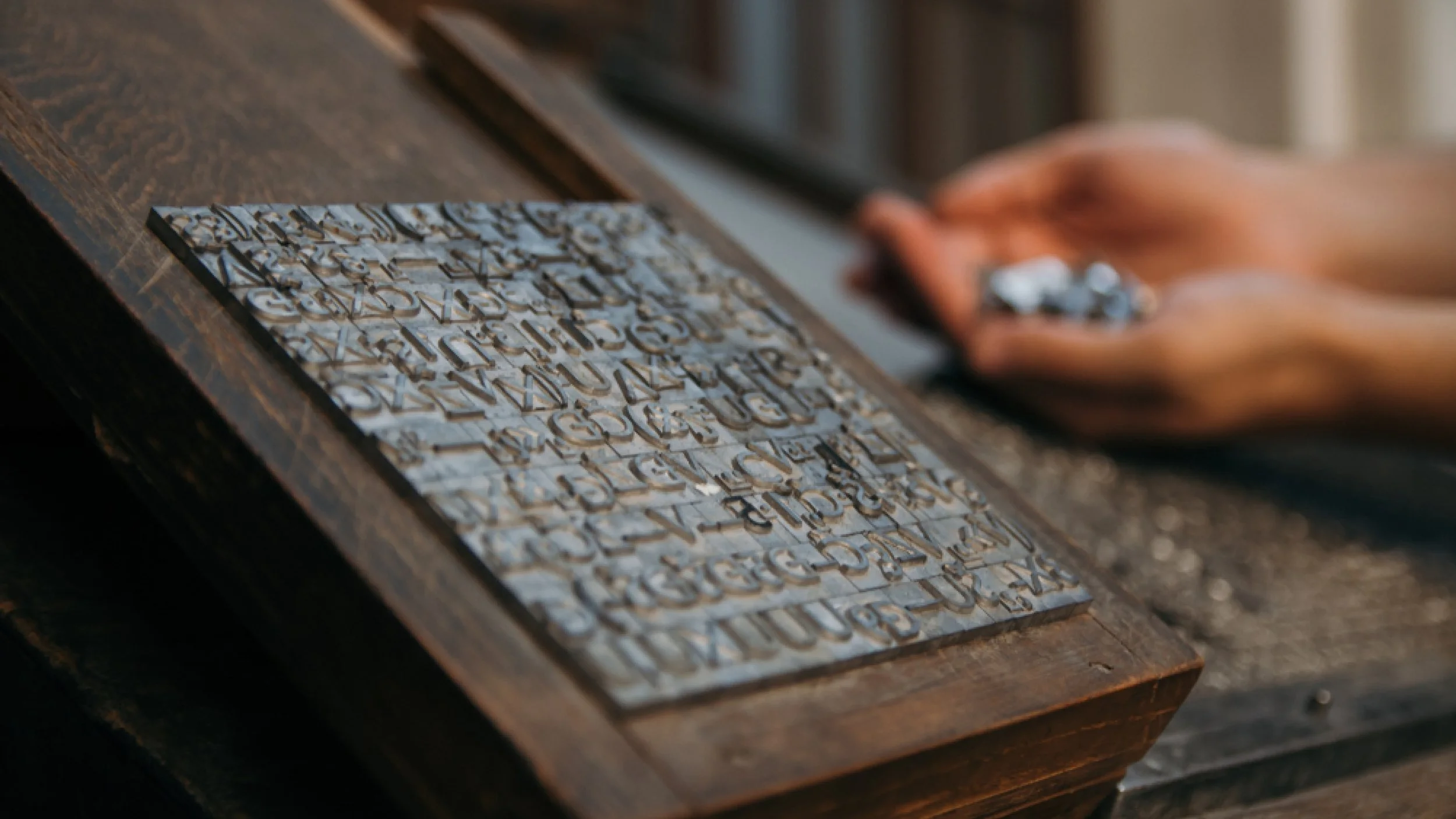
I was born with ink in my veins, not just because I took my first job as a newspaper journalist at 19, but because my Dad was a printer.
In fact, his experience was prescient of what we now face, drowning in the giant ocean of the AI Revolution. You see, in those days, the printing trade was split into several sub-specialities. Once a reporter’s copy had been sub-edited, it went out to the print shop where “lino-type” operators would type it into machines that set the columns of text into slugs of metal – a bit like stamps.
Then people like Dad, who were called compositors, would take those slugs of lead text and lay them out into a “galley”. After the “galley-proof” was run off, checked by the sub-editors, and any errors fixed, it became the job of the so-called machinists to run it off in the big presses before it was sorted into the finished newspaper and sent off for distribution. I apologise to any ex-journo’s of my vintage for telling you what you already know, but I live in the vain hope that at least a few younger folk actually read my occasional dispatch.
Why am I telling you all this? Because around about 1995, Dad retired after 50 years in the job… and within about a year, all the linotype operators and compositors were made redundant. In fact, these trades had disappeared quite a few years earlier in more “advanced” overseas newspaper production plants.
Unfortunately, I now see the same fate heading for many in the communications and marketing sector, but, perhaps naively, I try to look for little white clouds that might represent hope that human intellect and the work of the skilled hand might still have a place.
I was pondering this after reading a typically insightful, well-informed — and frankly chilling — analysis by Alan Kohler on the ABC, examining the impact of AI on jobs and misinformation. (I have pasted a link at the end of this blurb because I know that once you click on it, you’ll head to another corner of the digital globe and never return to read my words of misguided wisdom.)
The daily rise of digital “fake news” (even Donald Trump is occasionally right) raises an interesting scenario.
To get to the point, perhaps the days of hard-copy brochures and related marketing collateral aren’t as digitally doomed as we may think.
The big issue arising from the capacity of AI to present absolute lies and false information as credible facts brings with it a huge dilemma for consumers: How on earth do I know what we are reading, listening to, or watching actually comes from the company it purports to represent or provides credible information on the product or service I am about to purchase?
In the same way that drug dealers are drawn to the use of cash, perhaps the only solution for marketers is to still print things on paper and dare I say it, even send it by post?
Yes, I know some 10-year-old girl in Silicon Valley has already developed some digital system to “prove beyond doubt” that what you are reading or watching on screen is legitimate. But perhaps (recycled) paper products might still be a thing??
Oh yes, and here’s Kohler’s great piece below: Y’all come back now…
Further reading and listening
Alan Kohler, ABC News — an in-depth look at AI, misinformation and the future of work
And, for those with access to Apple’s podcast app, I’d recommend this great analysis on a recent episode of The AI Economy podcast (One and Tooze)
(Available via Apple Podcasts, Spotify, YouTube and Podbean)
For more insights and ramblings on strategic business communications and marketing from JLCA Director John Le Cras, visit the JLCA Journal page.